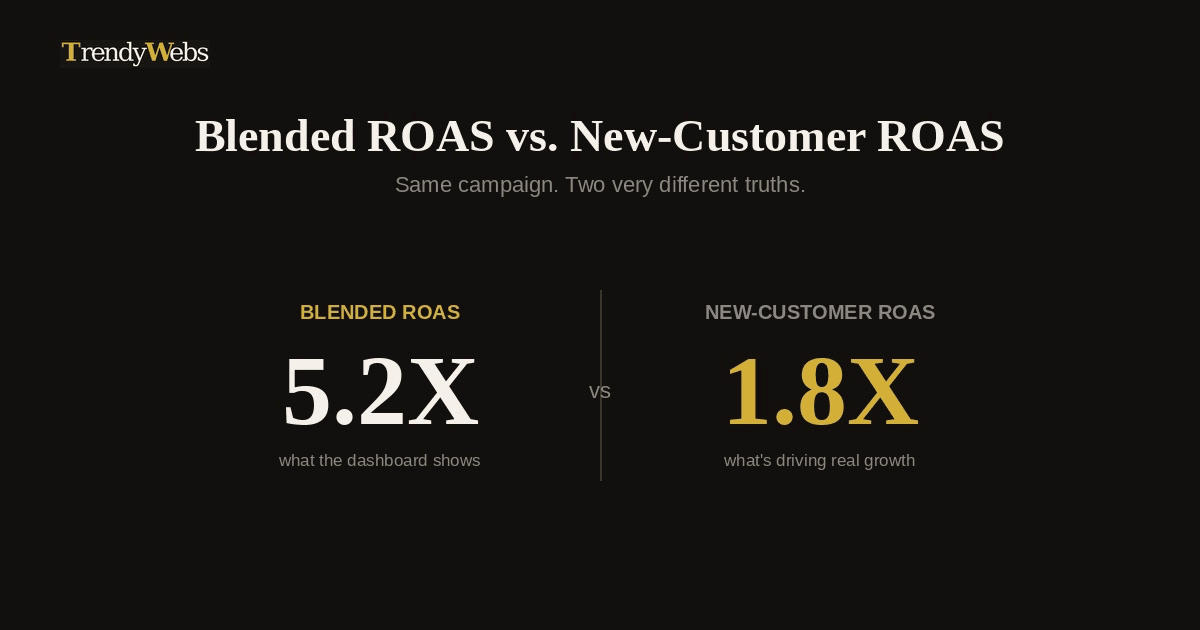
Your dashboard says 5.2X ROAS. That feels great, right?
Here's the problem: that number is probably blended, and blended ROAS can tell a very different story than the one you think it's telling.
Blended ROAS (return on ad spend) is the total revenue your ads generated, divided by total ad spend, without separating out who bought because of the ad versus who would have bought anyway.
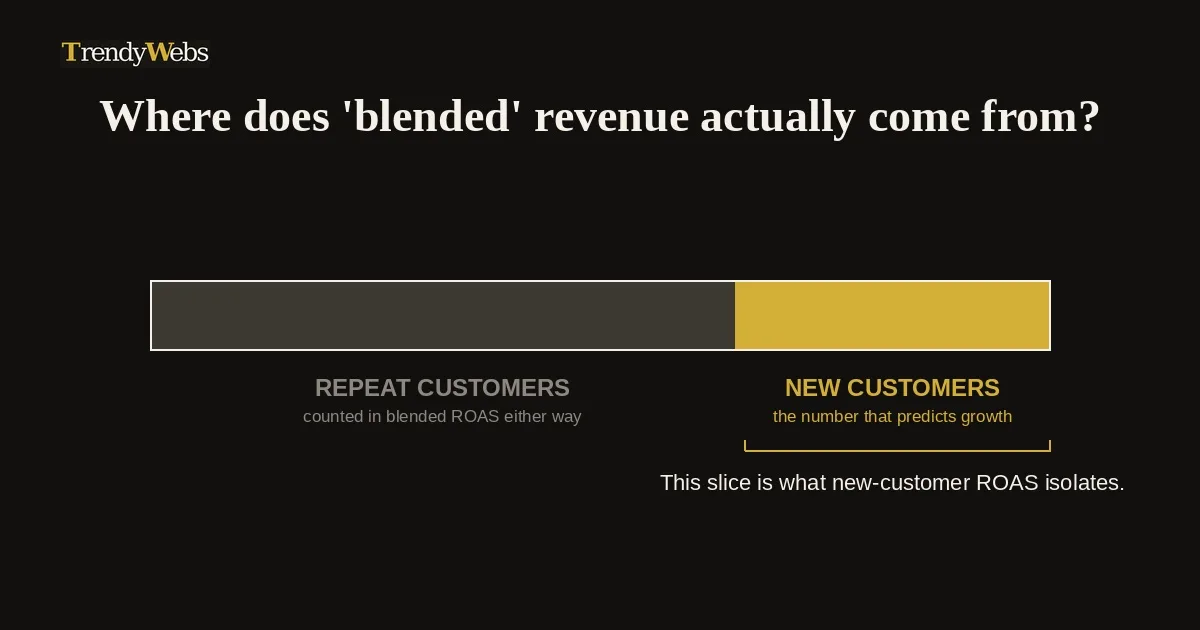
That second group matters more than most people realize. If a repeat customer sees your ad and buys again, that sale gets counted in your ROAS, even though there's a good chance they would have come back on their own, ad or no ad. Loyal customers, email subscribers, and people already searching for your brand name all get folded into the same number as someone who found you for the first time because of the ad.
The result: blended ROAS can look strong even when your ads aren't finding new customers. It's rewarding retention while wearing the costume of growth.
New-customer ROAS isolates the return generated specifically from people who bought for the first time. It strips out repeat buyers and shows you what your ad spend is earning back from net-new business.
This is the number that answers the question that matters: is this ad spend growing the business, or just riding on customers we already had?
In our own work, we've seen campaigns with a blended ROAS north of 5X where the new-customer ROAS was closer to 1.8X, still profitable, but a very different story than the dashboard headline suggested.
A few common reasons blended and new-customer ROAS drift apart:
None of this means blended ROAS is a bad metric. It's useful for understanding total campaign efficiency. The mistake is treating it as the only number that matters, or worse, using it as the sole justification for scaling ad spend.
Most ad platforms and analytics tools let you segment conversions by new versus returning customer. In Meta Ads Manager, this typically means looking at purchase events broken down by customer status. In GA4, it means setting up proper e-commerce tracking that distinguishes first-time transactions from repeat ones.
If you're not currently able to make this split, that's usually a sign your tracking infrastructure needs attention before your budget decisions can be trusted.
Neither number is "wrong." Blended ROAS tells you about total campaign efficiency. New-customer ROAS tells you whether your ad spend is finding growth. The mistake is only looking at one of them.
Before your next budget review, don't just pull up the blended number. Split it. What you find might tell a very different story than the one your dashboard is showing you.
It depends heavily on your margins, industry, and average order value, there's no universal good number. A 3X blended ROAS might be highly profitable for a high-margin service business and barely break-even for a low-margin e-commerce product. New-customer ROAS should always be evaluated against your actual customer acquisition cost tolerance, not a generic benchmark.
Take the revenue generated specifically from first-time customers attributable to a campaign, divide it by the ad spend for that campaign. This requires your tracking setup (GA4, Meta Pixel, or your CRM) to be able to distinguish new versus returning customers at the transaction level.
No. For businesses with genuinely low repeat-purchase rates, blended and new-customer ROAS tend to stay close together. The gap matters most for subscription businesses, retargeting-heavy campaigns, and brands with strong existing customer loyalty.